1. Licensing Occupations: Ensuring Quality or Restricting Competition? by Morris Kleiner
2. How Not To Be Wrong: The Power of Mathematical Thinking by Jordan Ellenberg
3. Superintelligence: Paths, Dangers, Strategies by Nick Bostrom
4. The Tyranny of Experts: Economists, Dictators, and the Forgotten Rights of the Poor by William Easterly
5. How Adam Smith Can Change Your Life: An Unexpected Guide to Human Nature and Happiness by Russ Roberts
6. Waking Up: A Guide to Spirituality Without Religion by Sam Harris
7. Designing Resilience: Preparing for Extreme Events edited by Louise Comfort, Arjen Boin, and Chris Demchak
8. Political Ideologies and Political Parties in America by Hans Noel
9. Political Order and Political Decay by Francis Fukuyama
10. Mismatch: How Affirmative Action Hurts Students It's Intended to Help, and Why Universities Won't Admit It by Richard Sander and Stuart Taylor
Showing posts with label Book Review. Show all posts
Showing posts with label Book Review. Show all posts
Saturday, October 25, 2014


Tuesday, October 14, 2014
Book Review: Building a World Class Transportation System by Charles Marohn
Charles Marohn of Strong Towns recently released a short e-book laying out his analysis of the problem with our transportation system, and his plan to fix it. The core insights of Strong Towns derive from a brilliant realization: that by merging our analysis of planning, design and transportation engineering with public finance and economics we can discover surprising truths about what produces growth and prosperity on a fine-grained scale.
He begins by contrasting the current wave of transportation infrastructure building with previous waves, specifically the construction of the railroad and interstate networks. In contrast to today, previous systems were essentially 'low-hanging fruit': relatively small investments reaped huge gains in productivity. The returns on subsequent building was much lower: connecting two high-performing places creates more wealth and opportunity than connecting two medium- or low-performing places.
Two subtler points emerge from this story. One is an institutional ratchet effect. During the 'high-return' days, certain institutional norms and arrangements formed and became locked-in, even as the landscape of infrastructure in the US changed dramatically. This idea of 'drift' (or political decay in words of Francis Fukuyama), where policy institutions don't keep pace with changing realities, is rampant here.
The second point is more philosophical: by maintaining the institutional inertia of infrastructure building even as the ROI of these investments tanked, information-processing and planning-fallacy concerns became more potent. Without the feedback mechanism of prices to coordinate the effective use of scarce resources, infrastructure decisions are largely based on the priorities of the political system. As the low-hanging fruit was picked and finding high-value investments became more difficult, the political system's inherent informational limitations became more apparent (and more costly).
A large chunk of the book is devoted to articulating the core Strong Towns concepts and laying out a specific reform proposal. I don’t have much to add on this, only to say that his forceful argument against using excess tax revenue from financially-productive places (i.e. those that generate more tax revenue than they consume in public services) to build stuff in non-financially-productive places isn't a blanket argument against all geographic redistribution. His case is limited to the narrow domain of transportation spending, and even then his claim is actually optimistic. Marohn is saying that even a poor place with low growth can be 'financially productive' in an infrastructure sense, so long as it fully appreciates the full tax revenue and maintenance implications of public investments. This is where his framework’s conclusions intersect with localist and resilience-oriented movements.
The non-partisan, crossover appeal of Strong Towns is a big reason for its success: it uses economics-style analysis (traditionally associated with conservatives) to arrive at conclusions traditionally associated with liberal urbanists. This leads to novel and intellectually satisfying arguments on many topics. A good example is the suburbs: liberals have long disparaged this pattern of development, but often in scattershot, wishy-washy, and vaguely elitist ways. Strong Towns gives us at least one good reason why the suburbs are terrible: the ratio of private investment to public investment is such that these regions are a net drain on the public purse.
In general the book is good, although its target audience suffers from a 'missing middle' problem. For someone who's unfamiliar with Strong Towns, this is a solid introduction that encompases most of the approach’s flavor. At the other end of the spectrum, this book will be valuable to readers with a technical or professional interest in learning about the finer details of a Strong Towns vision of policy. For amateurs already well-versed in the framework, but lacking a reason to deep-dive into the particular magnitudes of financing ratios, this book is somewhat lacking.
Marohn concludes by gaming out the winners and losers of his public finance reform proposal. It's an interesting attempt at political analysis, but it seems half-baked: some of his claims are overly optimistic, and the actual coalitional breakdown of any major reform in transportation will likely be as familiar and intractable as always. At times the book slips into the, "nation of whiners" and "people are stupid" rhetoric (common among certain subversive urbanists), which is obnoxious, although perhaps understandable given the epidemic amount of wrongness that exists in this field.
Sunday, December 22, 2013
Avatar: The Last Airbender is Stunning in it's Technical Perfection
 |
| Photo Credit: absoluteanime.com |
A few takeaways:
1. Dialogue: More and more I'm coming to the conclusion that, outside of particularly skilled artistic circumstances (Tarantino etc.), good dialogue requires the periodic joke or comment that puts the viewer off-balance. Typically this means breaking out of the stiff formality of mundane plot-furthering dialogue and having characters say something that's believable from a real-world perspective. Similar to breaking the fourth wall, dialogue that makes me think "I would respond in a similar way" heightens focus and spurs reflection in an intellectually rewarding way. Avatar does this all the time.
2. Humor: Viewers who have difficulty enjoying anime--or cartoons in general--might not appreciate Avatar's humor. The comedy style in anime (and to a lesser extent American cartoons) is quite well-defined with fairly strict conventions regarding certain emotional symbols and visual devices. Avatar adheres to these conventions, but employs humor that is slapstick and creative, offering a refreshing break from the dark- and dry-humor that dominates most narrative shows these days.
3. Story: Simply incredible. The show is built around a band of travelers seeking out various spiritual masters scattered throughout an ancient world. The protagonist, a sort of "chosen one" type figure, is a kid who was frozen in ice, seeking to correct the damage that's been done in his absence by an unconstrained militaristic empire. Exploring an impoverished world at war allows for a really interesting take on the moral ambiguity of truly desperate people willing to do anything to survive. A rich historical background is revealed gradually throughout the show.
4. Characters: Every single episode furthers each character's development. And, amazingly, bit characters develop fast and actually return. This is one of the most unique and refreshing aspects of Avatar. The show is built around three seasons but one main story. Each show is variable in it's weighting towards furthering the plot, but in no way does it split between "monster of the week" episodes (to borrow X-Files' formula) and mainline plot episodes. Almost every character is pretty original, which is a feat.
5. Philosophy: Avatar mostly concerns the training of young warriors in various magical martial arts disciplines. What's impressive is the way Avatar infuses real-world philosophy and spirituality into its zany cartoon world. Brahminism, Shinto, warrior folk religions, various branches of Buddhism (Tibetan Buddhism is represented by the "air" caste which resides in cloistered mountain monasteries) are all readily apparent.
6. Correct Use of Aww: This is a pretty new concept that's been popularized by the internet. Employing cute animals to trigger the emotion of "aww" is quickly developing to rival in importance the old mainstay artistic categories like humor, drama, and action. Animals are important devices because their endearing ignorance and purity is used as a foil: when things get too serious they pleasurably jolt the viewer and make everything light-hearted. While related to humor, cute animals are something different. Avatar uses animals and the concept of "aww" to great effect.
7. Style: Most great cartoons try and carve out a unique style, and Avatar succeeds in a curious way. The animation isn't unique at all, but the show still conveys a strong sense of style through creative world-building. The setting is essentially a fictional amalgamation of stylized Asian indigenous cultures. The series winds its way through a detailed anthropological exploration of architecture, clothes, spirituality, and martial arts styles. Additionally Avatar is filled with quirky stylistic easter eggs that add depth and texture over many episodes. For example, most every animal in the show is a comical combination of two real-world animals, like a "pig bear" or "cat owl". It's just incredibly weird.
8: Deepness of Theory: I don't really know how to describe this aspect of the show, but it's the #1 thing that stood out to me when compared to other great cartoons. It's sort of like the combination of a) logical consistency within the fictional world and b) attention to detail. The magic/martial arts they invent in the series involve the ability of certain individuals to manipulate elements using specific martial arts techniques. In most cartoons, magic and superpowers are used only in order to have cool action and maybe a bit of character development. This almost always leads to there existing logical applications of superpowers that never show up on camera. Avatar fully explores the limits of the fictional world they've constructed, so if you say "well if you can control water why don't you manipulate blood," this actually pops up in the show. Maybe call it "logically extensive world-building" or something.
9: Good Vocabulary: The advanced concepts and general lack of dumbing-down is great.
In general the core idea of merging fantasy magic with Asian martial arts techniques is a damn good one, and allows for tons of creativity. But that's not entirely why the series succeeds. The idea of world-building within one culture and then dividing it up into four sub-cultures all based around simple-to-understand elements (and the commonly-understood emotional associations with these (e.g. air = free, fire = rage etc.)) makes a basic model of culture that facilitates the exploration of differences. The main themes of Avatar: war, diversity, importance of history, duty, honor, violence vs. nonviolence, importance of family and love, exceptionality vs mediocrity, competition between freinds etc. are all complicated, but Avatar flawlessly navigates this terrain. Not bad for a Saturday morning cartoon.
Saturday, July 6, 2013
Narrative Nonfiction is a Scourge Upon the World of Literature
I recently finished Behind the Beautiful Forevers, a narrative nonfiction (NNF) book by Pulitzer prize-winning journalist Katherine Boo about life in a Mumbai slum. It won the National Book Award last year, and made tons of "best books of 2012" lists. The book basically follows a few core characters in their struggle to live good lives amid high levels of material poverty, corruption, violence, environmental deficiency, and economic uncertainty.
From an aesthetic perspective the writing was nice and the book was very enjoyable and readable. From an informational angle the book was thin gruel.
 While I appreciated learning about terrible poverty and the dynamics of lives totally at odds with the rich-world experience, I couldn't get past the basic approach to the whole project: that these were stories about real people obtained from years of tireless interviews and research by the author (and her translators). I've developed a mild aversion to the NNF genre over the years with books like And the Band Played On and All the President's Men, but this newest volume really confirms my view. NNF is a manipulative sham, and should be obliterated. Here's why.
All books, fiction or nonfiction, are mixtures of aesthetic and informational values. Most "concept-driven" nonfiction books (theory plus case studies) lean towards the informational end, presenting clear arguments and analysis in plain English. Fiction, by contrast, emphasizes literary beauty, triggering emotion and meaning. Most readers intuitively understand that there exists a necessary trade-off between these two approaches to generating knowledge through books. NNF bugs me because it fails in the informational approach, yet gets represented by authors, critics, and publishers, as informationally-dense. There's an epistemological problem, and a reader-manipulation problem.
According to the popular justification, NNF is a richer, thicker form of description compared to traditional journalistic and scientific approaches. While it certainly contains lots of good details, the demands of constructing a compelling and readable narrative forces the author to compromise on fidelity to the truth. The literary structure virtually guarantees that each page is filled with dozens of minute interpretations and small tweaks to the source material. Cracking open the book to any random page demonstrates this phenomenon (page 216, first sentence):
Clearly interpretation problems are inherent in any secondary-source material, but the magnitude of those problems in NNF is simply gargantuan. One might respond by claiming that there's no such thing as objective truth, and that according to my quibbling, all books--even non-fiction data-driven timelines--are filled with bias and subjectivity. I agree, but society has by public consensus demonstrated a willingness to accept a certain minimal level of epistemic distortion in different literary genres for the sake of convenience. NNF breaks this norm by not being honest and forthright about the degree to which artistic liberties affect the final text.
This is the second issue that really grinds my gears: the huge gap between what readers think NNF is and what it actually is. That the content is very sensitive to the biases and interpretive whims of the author is, of course, not by itself sufficient justification to condemn the genre to the dustbin of history. After all, pure fiction is entirely author-driven, and has plenty of value. The problem lies with the branding, marketing, and reputational angles of the NNF project.
The genre is parasitic on the good work and identity of the the journalistic method. Readers associate NNF with journalism (many NNF authors are journalists) and all the well-earned positive qualities that go along with it. From the opposite direction, journalists get to differentiate their work from the pile of terrible cookie-cutter nonfiction books by packaging their research in the guise of literary fiction. They get the social and marketing benefits of associating with that more artistic culture and identity. Fiction writers get to be serious and substantive, while journalists get to be literary and cosmopolitan.
To emphasize, there's nothing wrong with constructing counterfactual narratives for the purpose of entertainment--sometimes counterfactuals can even help you understand stuff about the real world. But to portray counterfactual as factual is a massive error that empties the project of all meaningful content while simultaneously abusing the relationship of trust between author and reader. Perhaps there is a place for NNF in our society, but first we must acknowledge its flaws and develop solutions. I suggest we start with renaming the genre. "Real-world fan fiction" has a certain zing to it.
From an aesthetic perspective the writing was nice and the book was very enjoyable and readable. From an informational angle the book was thin gruel.
 While I appreciated learning about terrible poverty and the dynamics of lives totally at odds with the rich-world experience, I couldn't get past the basic approach to the whole project: that these were stories about real people obtained from years of tireless interviews and research by the author (and her translators). I've developed a mild aversion to the NNF genre over the years with books like And the Band Played On and All the President's Men, but this newest volume really confirms my view. NNF is a manipulative sham, and should be obliterated. Here's why.
All books, fiction or nonfiction, are mixtures of aesthetic and informational values. Most "concept-driven" nonfiction books (theory plus case studies) lean towards the informational end, presenting clear arguments and analysis in plain English. Fiction, by contrast, emphasizes literary beauty, triggering emotion and meaning. Most readers intuitively understand that there exists a necessary trade-off between these two approaches to generating knowledge through books. NNF bugs me because it fails in the informational approach, yet gets represented by authors, critics, and publishers, as informationally-dense. There's an epistemological problem, and a reader-manipulation problem.
According to the popular justification, NNF is a richer, thicker form of description compared to traditional journalistic and scientific approaches. While it certainly contains lots of good details, the demands of constructing a compelling and readable narrative forces the author to compromise on fidelity to the truth. The literary structure virtually guarantees that each page is filled with dozens of minute interpretations and small tweaks to the source material. Cracking open the book to any random page demonstrates this phenomenon (page 216, first sentence):
' "But at least Kasab knows in his heart that he did what they said he did." That had to be less stressful than being beaten when you were innocent. 'Now, it's possible that this minor comment by the narrator is factually grounded in some deeply personal interview that the author conducted. But how do we know? Readers have no way to verify the truthiness of the writing process, which likely entailed months spent "in the kitchen" organizing and experimenting with different arrangements of the source material (wording, ordering, mood, tempo, etc.). By itself this individual digression doesn't matter very much. But taken on the whole, paragraph after paragraph, page after page, we get something that's been so heavily warped and distorted that it basically amounts to a work of masked mockumentary.
Clearly interpretation problems are inherent in any secondary-source material, but the magnitude of those problems in NNF is simply gargantuan. One might respond by claiming that there's no such thing as objective truth, and that according to my quibbling, all books--even non-fiction data-driven timelines--are filled with bias and subjectivity. I agree, but society has by public consensus demonstrated a willingness to accept a certain minimal level of epistemic distortion in different literary genres for the sake of convenience. NNF breaks this norm by not being honest and forthright about the degree to which artistic liberties affect the final text.
This is the second issue that really grinds my gears: the huge gap between what readers think NNF is and what it actually is. That the content is very sensitive to the biases and interpretive whims of the author is, of course, not by itself sufficient justification to condemn the genre to the dustbin of history. After all, pure fiction is entirely author-driven, and has plenty of value. The problem lies with the branding, marketing, and reputational angles of the NNF project.
The genre is parasitic on the good work and identity of the the journalistic method. Readers associate NNF with journalism (many NNF authors are journalists) and all the well-earned positive qualities that go along with it. From the opposite direction, journalists get to differentiate their work from the pile of terrible cookie-cutter nonfiction books by packaging their research in the guise of literary fiction. They get the social and marketing benefits of associating with that more artistic culture and identity. Fiction writers get to be serious and substantive, while journalists get to be literary and cosmopolitan.
To emphasize, there's nothing wrong with constructing counterfactual narratives for the purpose of entertainment--sometimes counterfactuals can even help you understand stuff about the real world. But to portray counterfactual as factual is a massive error that empties the project of all meaningful content while simultaneously abusing the relationship of trust between author and reader. Perhaps there is a place for NNF in our society, but first we must acknowledge its flaws and develop solutions. I suggest we start with renaming the genre. "Real-world fan fiction" has a certain zing to it.
Saturday, May 11, 2013
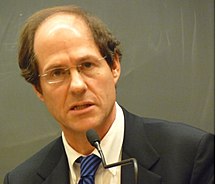
Cass Sunstein Wrote Another Book
I recently finished Simpler: The Future of Government by legal scholar and former OIRA administrator Cass Sunstein. I've read some of his other books--notably Risk and Reason, which emphasizes cost-benefit analysis in regulation--so I was excited to hear first-hand how his academic theories fared in Washington's bureaucratic and political swamp.
 The book is framed around Sunstein's experience heading up OIRA, the executive-branch office responsible for overseeing new regulations set by the various federal agencies. OIRA studies proposed rules, coordinates expertise, manages inter-governmental turf issues, and ultimately serves as a veto point for regulation. Sunstein makes two core arguments. First, that public policy should be much simpler, accomplished largely by cutting red tape and through behavioral innovations that help businesses and citizens interact better with government (think label design, or -EZ government forms). Second, that public policy should have stronger empirical foundations, driven by cost-benefit analysis and retrospective analysis (looking back at existing regulations to determine their efficacy). The book generally alternates between short personal vignettes, research findings and theory from behavioral psychology, and descriptions of specific policy accomplishments Sunstein pushed through while at OIRA.
Sunstein's reflections on moving from academia to government administrator (with a painful confirmation fight in between) were by far the best parts of the book. His diagnosis of institutional incentives--academia favors novelty, politics favors loyalty--were fascinating. I did get the sense, however, that we're not hearing the whole story. Sunstein has devoted a career to studying OIRA and it's agenda, yet he resigned as soon as he could without raising eyebrows. This book offers a glimpse into some potential dissatisfaction about Washington--a snide comment here and there--but in general the tone is incredibly cheery and positive, almost eerily so. I suspect Sunstein's sense of duty has prevented a full and honest account; perhaps after Obama leaves office we'll see his full analysis of Washington's dysfunction. That's a book I would enjoy.
Simpler ranks near the bottom of Sunstein's many books, if only because its marketing style fits so poorly with the content. Given the success of Nudge, the impulse to publish another big-picture Malcolm Gladwell-esque book is understandable. But Sunstein has already published several of these, and the unifying theory--"simpler" government policy--is weak. He critiques rules prohibiting private-sector discretion, but admits the legal uncertainty and added costs of vague regulation is not always the best. He promotes performance standards over design standards, yet spends the bulk of the book cataloging the many ways in which process matters in behavioral decisionmaking. He takes pains to separate questions about the complexity of government from questions about the size of government, yet describes in detail the extreme politicization of every facet of his experience at OIRA, an evident failure of the idea in practice. In general the book bends over backwards to fit the big-picture theory, and rehashes lots of content from previous works in order to bulk up to the expected page count. This is a shame given how interesting and important Sunstein's accomplishments were at OIRA.
 The book is framed around Sunstein's experience heading up OIRA, the executive-branch office responsible for overseeing new regulations set by the various federal agencies. OIRA studies proposed rules, coordinates expertise, manages inter-governmental turf issues, and ultimately serves as a veto point for regulation. Sunstein makes two core arguments. First, that public policy should be much simpler, accomplished largely by cutting red tape and through behavioral innovations that help businesses and citizens interact better with government (think label design, or -EZ government forms). Second, that public policy should have stronger empirical foundations, driven by cost-benefit analysis and retrospective analysis (looking back at existing regulations to determine their efficacy). The book generally alternates between short personal vignettes, research findings and theory from behavioral psychology, and descriptions of specific policy accomplishments Sunstein pushed through while at OIRA.
Sunstein's reflections on moving from academia to government administrator (with a painful confirmation fight in between) were by far the best parts of the book. His diagnosis of institutional incentives--academia favors novelty, politics favors loyalty--were fascinating. I did get the sense, however, that we're not hearing the whole story. Sunstein has devoted a career to studying OIRA and it's agenda, yet he resigned as soon as he could without raising eyebrows. This book offers a glimpse into some potential dissatisfaction about Washington--a snide comment here and there--but in general the tone is incredibly cheery and positive, almost eerily so. I suspect Sunstein's sense of duty has prevented a full and honest account; perhaps after Obama leaves office we'll see his full analysis of Washington's dysfunction. That's a book I would enjoy.
 |
| Photo Credit: Wikipedia |
Simpler ranks near the bottom of Sunstein's many books, if only because its marketing style fits so poorly with the content. Given the success of Nudge, the impulse to publish another big-picture Malcolm Gladwell-esque book is understandable. But Sunstein has already published several of these, and the unifying theory--"simpler" government policy--is weak. He critiques rules prohibiting private-sector discretion, but admits the legal uncertainty and added costs of vague regulation is not always the best. He promotes performance standards over design standards, yet spends the bulk of the book cataloging the many ways in which process matters in behavioral decisionmaking. He takes pains to separate questions about the complexity of government from questions about the size of government, yet describes in detail the extreme politicization of every facet of his experience at OIRA, an evident failure of the idea in practice. In general the book bends over backwards to fit the big-picture theory, and rehashes lots of content from previous works in order to bulk up to the expected page count. This is a shame given how interesting and important Sunstein's accomplishments were at OIRA.
Wednesday, March 27, 2013
Power Players: Mark Kleiman
 |
| Photo Credit: Todd Cheney/UCLA |
UCLA Professor of Public Policy Mark A.R. Kleiman has been hired by Washington state to assist with implementing its new marijuana legalization law, which is great news. Kleiman, who blogs at The Reality-Based Community, is one of the best thinkers and communicators on crime and crime policy currently out there. Crime is one of the most fascinating public policy areas in part because its study so multi-faceted. Rational-choice models and analytical tools from economics provide the main framework for thinking about crime: law-breakers are just regular people reacting to incentives; enforcement and punishment is a cost, not a benefit, etc. Psychology compliments this by providing explanations for "irrational" behavior: why do impulsive people commit crimes even when the expected payoff is negative; why is swift and certain punishment a better deterrent than high severity, etc. Political science helps us understand the anarchic conflict-resolution environment that exists for certain coalitions and markets for illegal goods that lack a neutral court system and why it leads to violence. Sociology has much to say about the cultural conditions of high-crime populations and their links to poverty and other social ills. Moral philosophy has long been concerned with crime: what should the boundaries of one's freedom be?; how can we encourage virtue?; the concept of just desert, etc. And unlike many social science fields, most regular people have a close personal relationship to the issue of crime and its effects.
With so much intellectual richness, it's a shame the topic of crime has become calcified in a boring equilibrium (likely due to the political incentives of fearful voters and powerful interest groups): Republicans and most Democrats generally support tons of enforcement and severe punishments, with any rhetorical deviation from the status quo treated as a "soft-on-crime" gaffe.
 Mark Kleiman expertly manipulates the issue dimensions of crime to cut through its tired framing. By ignoring the culture war and emphasizing crime as simply another boring public policy field for technocratic evidence-based interventions, new political coalitions can form and novel arguments advanced. From Kleiman's excellent Washington Monthly article critiquing the current parole system:
"It would be hard to imagine a system that could combine more punishment with less effective social control. It’s no surprise that so many people wind up what we could call “doing life in prison on the installment plan.” A parent who acted the way the probation system acts—letting most misconduct go unpunished, and occasionally lashing out with ferocious punishments—would be called both neglectful and abusive."Kleiman's book When Brute Force Fails: How to Have Less Crime and Less Punishment, is brilliant in its comprehensiveness, creativity, and style, and is one of the best books I've read all year. Most nonfiction books are too long and larded up with useless anecdotes, vignettes, and framing devices. This book is short and nearly every sentence means something useful and interesting. Kleiman's writing also includes an unusually high degree of epistemic humility. The complexity of social phenomenon is not swept under the rug, with probability and uncertainty playing a large role in claims about the effects of policy interventions, evaluations of research findings, etc.
Saturday, October 6, 2012
What's Mostly To Blame For Extreme Inequality In The U.S.?
Big structural changes like globalization and technology, according to the conventional wisdom. But Jacob Hacker and Paul Pierson develop an alternative theory in their book Winner-Take-All-Politics. In the book, they see political forces as the main culprit: both active legislation as well as the passive failure to update policy and regulations in light of changing economic circumstances ("drift"). Ten good facts I walked away with:
- Most analyses of inequality focus on two categories of people: the educated and the non-educated. But the category that really drives inequality statistics--mega-rich corporate executives--don't have notably higher levels of education. So education-based theories aren't sufficient.
- Other rich-world countries didn't experience the huge increases in inequality that the U.S. did. This points to a country-specific explanation, rather than global economic forces and technology.
- GDP per hour worked is a good measure because it partially corrects for the fact that much of the economic gains among lower- and middle-class people over the past 30 years have been from more toil.
- The collapse of labor unions was a really huge contributor to ballooning inequality. The employer-based health and retirement systems in the U.S. meant industries with historically high unionization rates got screwed by "legacy costs", resulting in lower employment growth.
- Due to the many veto points in its structure, the U.S. government has historically alternated between periods of drift and renewal. Since 1977 we've seen mostly drift and little renewal.
- The conventional wisdom holds that the 1960s were the start of some crazy political death spiral, but by looking at actual government action rather than electoral narratives, we see that Nixon was pretty moderate and status quo, while Carter blocked tons of renewal opportunities and initiated many regressive tax reforms.
- It's ironic that new forms of regulation in the 1960s and 70s incentivized the formation of business groups (example: U.S. Chamber of Commerce), resulting in more lobbying and interest group policy access.
- The advent of television dramatically increased the costs of running campaigns; political giving by business promptly skyrocketed.
- Most contemporary interest groups have narrow memberships and missions, and focus largely on "post-materialist" themes like social justice. No broad champion of middle class pocket-book economic interests has emerged to replace labor unions.
- Page 159: "Polarization primarily reflects not the growing polarization of voters, but the declining responsiveness of American politicians to the electoral middle."
Monday, October 1, 2012
Philosophy and the Rat Race
I recently finished How Much Is Enough? Money and the Good Life by the political philosopher/historian father-son duo Robert Skidelsky and Edward Skidelsky. The book basically traces the historical evolution of the philosophical concept of the 'good life,' covering the three big systems of ethics (consequentialism, deontology, and virtue) and then moving on to more modern stuff: Adam Smith, Marxism, the sexual revolution, John Rawls, environmentalism, happiness economics, and finally the capability theory of justice. The book closes with some policy suggestions designed encourage more "good life" living. A few takeaways:
- The whole book has a great futurist tilt to its analysis, largely due to its framing device: economist John Maynard Keynes' prediction that increasing worker productivity would result in tons of leisure time for most workers. Obviously that didn't happen, but by interpreting every historical theory in terms of its Utopian vision, we get a book that's not just your typical (unoriginal) 'history of philosophy'. I wish they had pushed this theme a bit further into more explicitly futurist territory.
- For me the best nugget of new information in the book was an insight by economist Gary Becker. According to Becker, we ought to look at leisure time not as a benefit but as a cost--the cost of not working! Rich, highly productive people, then, give up a lot to just chill out and do nothing. This realization overturns the conventional wisdom: there's no a priori reason to expect work hours to decrease as wealth and productivity increase.
- Interestingly, this book really emphasizes the huge historical significance of the story of Faust, in its various incarnations. Put it on your reading list.
- The last two chapters, focusing on the specific elements of the 'good life', were unoriginal and unpersuasive. Essentially the authors create a list of conditions necessary for an individual to live a 'good life.' They attempt to justify this list without grounding it in any particular ethical framework, creating a sense of arbitrariness. Additionally, their theory says nothing about how to deal with situations where trade-offs between ingredients are necessary.
For more, check out Richard Posner's New York Times book review, and definitely check out this EconTalk interview with Robert Skidelsky.
Sunday, September 23, 2012
Book Review: Why Nations Fail by Daron Acemoglu and James Robinson


On a methodological note, the historical examples that comprise the bulk of the book don't appear to be organized in any systemic way, opening up the possibility of cherry-picked examples that only support the theory. Indeed, certain challenging cases are ignored or brushed aside: the long global history of slavery, India's caste system, and the treatment of immigrants, animals, children, and the disabled in state institutions.
Lastly, the conceptual foundation of Acemoglu and Robinson's theory is somewhat misleading. While the entirety of the book is rhetorically focused on the extractive-versus-inclusive-institution frame, the core message about causality--why some nations develop inclusive institutions while others don't--is not emphasized. Essentially Acemoglu and Robinson claim that there exists a positive correlation between inclusive institutions and success. Though they state that this relationship is causal, Acemoglu and Robinson make a stronger claim prior to this relationship, which undercuts it. They state that the inclusiveness of a nation's institutions is determined by...luck. Or, more specifically, idiosyncratic historical context combined with rare, high-impact events. Neither of which can be predicted or analyzed for patterns. For this topic of research, among political scientists, this position is radical and amounts to a strong critique of pretty much every previous model.
Long story short, Why Nations Fail isn't really a social science theory at all: it has no causal mechanism, it proceeds neither deductively nor inductively, and its terms and concepts are exceptionally vague. Best to view it as some sort of interpretive lens with which to view a certain genre of history.
Thursday, April 26, 2012
The Curious Preferences of Poverty
Most popular non-fiction books on development economics, foreign aid, and extreme poverty can be grouped into three broad camps. The first camp targets its analysis on state formation and institutional development. This is very much a political-philosophic approach, with major figures being Francis Fukuyama, Samuel Huntington, Amartya Sen, and more recently Daron Acemoglu and James Robinson with their wonderful new book Why Nations Fail.
 The second camp blames stagnant growth and instability on "development traps": negative feedback loops that keep poor countries poor. Under this paradigm, sufficiently large doses of well-coordinated foreign aid can jolt a country out of the trap and into a virtuous cycle of autonomous growth and institution-building. Jeffrey Sachs' The End of Poverty has the best articulation of this view, with Paul Collier's The Bottom Billion deepening the theory by cataloging more structural roadblocks to development.
The book is structured by topic, with chapters investigating various aspects of the economic lives of poor people. Many of the specific findings are incredibly interesting: poor people often choose fewer tastier calories over more cheaper calories; parents might not encourage education for their kids for fear of losing their assistance around the house. The limited conclusions at the end of the book are equally novel: the poor bear responsibility for too many aspects of their lives compared to rich people who have many "right" decisions made for them, like chlorinated water, fortified food, automatic savings, etc.

The third camp, in direct opposition to this "big aid push" idea, finds little evidence for entrenched poverty trap-stricken countries. According to this approach, development assistance is often counterproductive due to the misaligned incentives and limited information of foreign aid planners. William Easterly's The White Man's Burden is the best example of this perspective. The disagreement between camps 2 and 3 is roughly analogous to the central planning-versus-free market cleavage in political philosophy.
Poor Economics, a new book by MIT economists Abhijit Banerjee and Esther Duflo, is an aggressive attempt to buck that well-trod dichotomy and identify a novel approach. They attempt this feat by going meta, grouping camps 2 and 3 together as "grand theory" approaches and balancing them against their own "no theory" approach. In their view, studying development should involve using rigorous data (especially from randomized trials) to make limited claims about which techniques work and which ones don't.
 |
| Photo Credit: Jim Davis |
Poor Economics is an interesting and important book, but its conceptual framing is flawed. It's filled with tons of fascinating little nuggets of information, but that's pretty much it. The attempt to go all meta and establish a new "big theory vs. little theory" framework falls into a common fallacy. Camp 3 is more critical theory than anything else, and labeling it a "big theory" just like camp 2 is akin to calling atheism a religion and 'off' a television channel. Instead, Poor Economics is most accurately viewed as merely a superb implementation of the camp 3 approach. Banerjee and Duflo, whether they admit it or not, are dutiful and committed searchers.
Monday, March 26, 2012
The Art __ Video Games

The show is basically divided into three sections. First, an introduction to the medium and a brief justification for the exhibit's existence. This area is eclectic and contains some cool concept art and quotes from game designers. Next, viewers have the opportunity to actually play some games: huge screens and modified controls are set up for legends like Pac-Man and Super Mario Bros., as well as more recent games like Flower. The final section, which comprises most of the exhibit, is a series of identical kiosks, one for each major game system (Nintendo, Xbox, etc.). A touchscreen lets the viewer watch game clips and listen to a brief analysis using a hand-held telephone speaker. Each kiosk sports four popular games from the system, one each for the following categories: 'action', 'target', 'adventure', and 'tactics'.
On the face of it, the exhibition suffers from three basic defects. First, there exists a strong focus on the gameplay mechanics and technical details of games, rather than on their artistic aspects. Innovations in graphics resolution and context-sensitive control schemes are interesting, but not really relevant. Compounding this is an unfortunate desire to provide mainly representative samples of games. Due to the restrictive nature of a gallery show, viewers are only able to get a small taste of a game relative to its length and richness. But instead of having this taste draw from the best, most artistically sophisticated moments of a game, we're supplied with boring screenshots and clips from mundane parts. And here's the thing: the best video games simply can't be broken down like that. People play for the peaks of enjoyment--the boss fights, the cinematic cutscenes, the particularly quirky or detailed rooms or characters. Incidentally (though perhaps not), these peaks also tend to be the most 'artistic' in the classical sense, and were unfortunately mostly absent from the exhibit.

Thirdly, the general failure of the exhibit to demonstrate the artistic aspects of video games is due in large part to the way it is organized conceptually. Essentially, the gallery is a list, compiled using two dimensions of analysis: time (past to future) and gameplay emphasis (action, target, adventure, tactics). Although employing a chronological structure is understandable for contextual reasons, I take issue with the equal weighting of each historical period. Frankly speaking, video games today are much more artistic than they were in the past. With access to higher informational content and processing power, there is simply more space for artistic pursuits within games (as well as non-artistic pursuits; video games are much longer now). As such, more gallery space should have been spent showcasing modern games. On a related note, as the video game industry has grown in size and prestige, its games have changed dramatically. We have games-within-games, narrative-based games, multiplayer games, sports and simulation games, etc. All of this complexity confounds and renders meaningless the categories used by the exhibition kiosks. Older, less complex games adhere to these categories better, but it begs the question: why, in an exhibition purportedly featuring the artistic value of video games, do we have an organization scheme driven by gameplay mechanics?
 This brings us to the real conceptual problem: the muddling of the different dimensions of value of video games, preventing the distinctly artistic value to shine through. Usually when an art gallery picks some obscure topic traditionally considered non-artistic and does a show, it works pretty well. That's because the topic's other dimensions of value are relatively boring. Take motorcycles, for example. Say I wanted to do a show about the art of motorcycles. You can imagine it: exquisitely detailed and creative paint schemes, strange metalwork, etc. The show would probably be good, in part because it would be focused squarely on the artistic stuff. Motorcycles have other dimensions of value, but no museum-goer much cares about the safety, transportation, speed, or comfort of the motorcycles. But here's the problem for video games: their other, non-artistic dimensions of value are really interesting. Gameplay mechanics is interesting! The difficulty balancing and camera angle setup and controls stuff are really fascinating and worthy of thoughtful inquiry also. But that stuff isn't artistic per se, and shouldn't have dominated an exhibition marketed as showcasing the art of video games.
The bottom line seems to be this: the relation between the idea of art and the video games themselves was vague and confusing. The show had some good bits, but overall it seemed more suited to a 'history of video games' classification than anything else. So what would a more conceptually sound exhibition look like? Without trying to define what art really is, there seems to be an important distinction between the art in video games, and the art of video games. This distinction can best be described as a continuum, going from existing artistic categories to novel artistic categories. Let me explain. First, video games showcase a wide variety of art from many existing media (music, architecture, interior design, story, etc.). Second, video games allow the player to experience this art in new ways (musical cues based on player decisions, exploring the architecture of a virtual building, etc.). Third, video games also create new artistic categories (immersiveness, storyline linearity and replayability, etc.). There's certainly quite a lot of nesting within this continuum (many video games contain short films, which are themselves collections of other media), and I don't think it's possible to draw a strict line between any level. It's not clear what cinematography actually is, but it's a useful concept and over time the public has accepted it as a legitimate dimension of artistic value. Perhaps it's too big a job for a single art exhibition, but it would be great to see a show starting with areas like 'architecture in video games', or 'the music of video games', then gradually moving on to higher-level stuff like 'storyline interactivity' or 'multiplayer experience' in later rooms. And then you could get into the artistic movements...

The bottom line seems to be this: the relation between the idea of art and the video games themselves was vague and confusing. The show had some good bits, but overall it seemed more suited to a 'history of video games' classification than anything else. So what would a more conceptually sound exhibition look like? Without trying to define what art really is, there seems to be an important distinction between the art in video games, and the art of video games. This distinction can best be described as a continuum, going from existing artistic categories to novel artistic categories. Let me explain. First, video games showcase a wide variety of art from many existing media (music, architecture, interior design, story, etc.). Second, video games allow the player to experience this art in new ways (musical cues based on player decisions, exploring the architecture of a virtual building, etc.). Third, video games also create new artistic categories (immersiveness, storyline linearity and replayability, etc.). There's certainly quite a lot of nesting within this continuum (many video games contain short films, which are themselves collections of other media), and I don't think it's possible to draw a strict line between any level. It's not clear what cinematography actually is, but it's a useful concept and over time the public has accepted it as a legitimate dimension of artistic value. Perhaps it's too big a job for a single art exhibition, but it would be great to see a show starting with areas like 'architecture in video games', or 'the music of video games', then gradually moving on to higher-level stuff like 'storyline interactivity' or 'multiplayer experience' in later rooms. And then you could get into the artistic movements...
Sunday, December 11, 2011
Power Players: Daniel Kahneman


Check out a great interview with Kahneman here, his fantastic TED Talk here, and a superb book review by the great Freeman Dyson here.
Saturday, December 3, 2011
Inside the Black Box

The film is technically well-executed, with a great cast and an energetic pacing, but its main strength is in the sheer number of interesting questions and concepts packed into each scene. Chiefly among them is the inherent tension between the interests of the company and its employees. Throughout the film, there are two distinct narratives: one concerning the survival of the firm, and the other focusing on the economic "survival" of the individuals working there. The former is a linear narrative unfolding over the course of the whole movie; the latter is more interesting in that each major characters' precarious situation is only revealed gradually and in sequential order, moving up the layers of corporate hierarchy.
We start with the lowly risk analysts and traders. Then on to the department and floor managers. Then the division heads and VPs. And finally, after an artful build-up, the almost mythical CEO is revealed. At every level, the higher-ups are portrayed as living embodiments of the corporate will. Only after the attention shifts up a level do we see their very human predicament and the harsh incentive structure forced upon them which induces such misanthropic behavior. If the institution needs something to be done and an employee won't do it, then they're out. And someone new comes in who will.
Margin Call seeks to muddy the moral waters of the 2007 crisis in a most delightfully challenging way--by confounding the culpability of the rich one percent banksters we love to hate. To cite a classic example: assume one manages to balance a pencil straight up on its eraser. Obviously it will be precarious, and will soon topple. How shall we best assess causation in this example? In one approach we could identify the particular wind gust that finally tipped the pencil from its perch. In reality, however, this situation is best explained by stating the obvious: that the pencil was tenuously balanced and obviously would soon topple, in one direction or the other. To blame a particular wind gust would be foolish. Its the system that counts.
Other topics explored include equality, the moral deserts of Wall St. traders and executives, and the work/play balance of life. It's a great movie, check it out.
Tuesday, June 21, 2011
Heavyweight Non-Fiction
Most non-fiction books that cover conceptual topics (like science or social sciency stuff) can usually be split into two groups, those written by experts (like academics) and those written by non-experts (like journalists). Over the past six months or so, I've noticed a trend in my non-fiction book selection: I've become less and less discriminatory regarding the author's level of expertise. I've pretty much been selecting books based solely on how much the topic interests me. Once I realized this, I reflected a bit on which books really affected me and which ones didn't. My conclusion? Academic heavyweights write better books. [note: I'm only talking about widely-circulated popular non-fiction books; real academic textbooky books are in a different category altogether]
Experts writing about a topic within their field of research start off with an initial stock of credibility in my eyes, while journalists or other lightweight non-fiction writers have to earn that trust. Heavyweight authors tend to fill their pages with more original and creative ideas, probably because they have actual academic contributions from which to draw on. Lightweights, by contrast, are not direct knowledge-producers and must restrict themselves to analyzing and synthesizing existing research. Often this results in more novel topics and book titles for the lightweights (they've got to find the gaps), but it also means the topics are less ambitious and more marginal.
Malcolm Gladwell might be the best example of a lightweight author: great writing, clever and fascinating topics, tons of cool little analyses and observations. But if I compare his books with those written by actual experts in the research fields from which he draws upon, there's no comparison. Nudge by legal scholar Cass Sunstein and economist Richard Thaler gives a much better overview of behavioral economics and unconscious decisionmaking than does Blink, while Bursts by graph theorist Albert-Laszio Barabasi provides a much deeper and more rigorous understanding of social cascades than does The Tipping Point.
I recently finished The Information by James Gleick (a lightweight), and I was stunned by the complete lack of creativity and original thinking. Marketed and publicized as a deep inquiry into the concept of "information," the book was merely a cobbled-together assortment of different scientific histories (a chapter on linguistics, one on logic, electrical engineering, early computers, etc.). The Hidden Reality by physicist Brian Greene delivered in a single chapter the most fascinating and unorthodox expression of the concept of information I've ever read. So don't be seduced by clever topics or good newspaper coverage (journalists surely promote their own). It's time to get picky and get smart. Read heavyweight non-fiction.
Thursday, April 7, 2011
The Nonfiction Short Story
The National Magazine Awards are out with their 2011 finalists, recognizing the best in long-form journalism. For a complete list of finalists, including article links, check out Longform.org.
Long-form journalism allows for a much richer presentation--arguments can include more information, profiles can contain multiple illuminating anecdotes, etc. While many successful journalists also write non-fiction books, the long-form medium is great exactly because of its relative concision. Sometimes a topic is too specific or obscure to deserve (or more importantly, adequately market) a full-length book or biography, and so long-form articles in magazines and newspapers allow detailed inquiry on a much broader range of topics.
Economist Tyler Cowen's The Great Stagnation, an ebook about the size of two long New Yorker articles, is a fantastically successful attempt at experimentation with an unusual length. I hope we see more of these nonfiction novellas in the future.
Friday, March 4, 2011
Short Stories Are Great
I've really been enjoying short stories of the science fiction variety lately. They always seem to have a fast-paced, haunting quality to them. I think that's because the reader abruptly enters the story in the middle; there's no real intro or conclusion, and hardly any information about what's going on. This creates a mysterious vibe which is really fun.
Frequent readers of Unity Politics will know that I regularly post sci fi short stories (for a full list, click the 'Information Nexus' label on the sidebar), most of which come from this fantastic anthology. Another incredible collection is William Gibson's Burning Chrome. It includes the architecture-themed story The Gernsback Continuum, (which coined the term 'raygun gothic') and Hinterlands, a story about a futuristic cargo-cult society. The latter is probably the creepiest and most powerful short story I've ever read.
 Most recently I've been immersed in the environmental-themed dystopias eerily imagined by Paolo Bacigalupi. Pump Six, an anthology of short stories, paints a grim future: immortal post-humans reflect on the discovery of an un-modified dog tenaciously surviving amidst a toxic mine-scarred landscape in The People of Sand and Slag; a black-market farmer harvests crops using illegally-obtained water from the drought-devastated Southwest U.S. in The Tamarisk Hunter; tyrannical agriculture corporations rule a post-petroleum world through genetically-engineered crops and industrial plagues in The Calorie Man; refugees fleeing their climate change-ravaged homeland struggle for survival within a socio-economic underclass in Yellow Card Man. Read these last two award-winning stories here.
If anybody has any suggestions for other good short stories (sci fi or otherwise), I'd love to hear them!
Frequent readers of Unity Politics will know that I regularly post sci fi short stories (for a full list, click the 'Information Nexus' label on the sidebar), most of which come from this fantastic anthology. Another incredible collection is William Gibson's Burning Chrome. It includes the architecture-themed story The Gernsback Continuum, (which coined the term 'raygun gothic') and Hinterlands, a story about a futuristic cargo-cult society. The latter is probably the creepiest and most powerful short story I've ever read.

If anybody has any suggestions for other good short stories (sci fi or otherwise), I'd love to hear them!
Sunday, February 13, 2011
The Thinking-Man's Shooter (continued)

As I've previously noted, BioShock 2 disappointed due to its much-too-obvious theme of collectivism. The original BioShock, although terrifyingly beautiful and technically superb, really impacted me because of its path-breaking focus on extreme libertarianism gone hellishly awry. The core identity of the BioShock series is a complex plot based on a political philosophic concept. Selecting a theme for the third game was always going to be challenging because the concepts in the first two games were drawn from a single philosophical idea, namely the libertarian-collectivist political spectrum. BioShock Infinite necessarily had to blaze a new trail by establishing a fresh political theme.
And they've done it: tea-party conservatism applied to its logical end. Our hero journeys through the floating city Columbia, a hellish amalgamation of jingoism, racism, anti-immigrant xenophobia, theocracy, originalism, exceptionalism, homophobia, and gun-obsessed militia culture. In keeping with the series' stylistic trends, clever visual flourishes abound (this time in the form of political campaign posters, rather than business advertisements) and a strong architectural theme exists (early 1900s America instead of 1960s art deco). As before, a heavy steampunk influence really spices everything up.
Another important observation is the introduction of a new symmetry in the series. The first two games were set in a dark, underwater city. In Infinite, we explore a bright, floating city kept aloft by dirigibles, with multiple structures interconnected through a network of rails. This polarity of below-ground and above-ground fantasy is intellectually rewarding, further testifying to the creativity and depth of the BioShock series. Can't wait!
Prediction: if the series continues its political symmetry thing, we'll be in for a real treat with BioShock 4. Think about it--what's the logical opposite of tea-party conservatism? Environmentalism, multiculturalism, redistributionism, appeasement, moral relativism, etc. What the extreme logical extension of liberal democracy is, I'm not sure, but crafting a dystopian vision from these colorful ingredients sounds. . . fruitful. Think Bioshock 4: The End of History and the Last Man.
Wednesday, December 8, 2010
A New Climate Change Discourse
Since its emergence as a major issue, the public discourse on climate change has focused primarily on preventing its harmful effects. By predicting the consequences of climate change, we are better able to understand the dire necessity of reducing greenhouse gas emissions. By focusing on strategies for reducing greenhouse gas emissions (technology, government policy & regulation), we are better able to understand the trade-offs associated with different solutions. Recently the idea of geoengineering, or global engineering solutions designed to prevent negative effects of climate change after greenhouse gasses have been emitted, has become popular in some circles.
 Perhaps as a reaction to the extreme pessimism inherent in geoengineering proposals, a new category of climate change discussion is popping up: adaptation. Whereas geoengineering is simply another attempt to prevent climate change's negative effects (albeit later in the geophysical process than reducing emissions), adaptation takes harmful climate change scenarios as givens, investigating how human societies and economies might adapt.
The Economist ran a great briefing about adaptation a few weeks ago, but the most comprehensive investigation of adaptation so far is the book Climatopolis: How Our Cities Will Thrive in the Hotter Future by Matthew Kahn. A UCLA urban economist, Kahn looks at how climate change scenarios will affect the global economy, specifically cities. He concludes that individual action will result in populations "voting with their feet" by moving away from areas hit the hardest. Additionally, innovators who find ways of solving new problems caused by climate change will find much support. The third major conclusion Kahn draws is that adaptation will be much easier for richer, developed populations, increasing socioeconomic inequality. This seems like an obvious conclusion, but discussing it explicitly was incredibly uncomfortable yet refreshing: the banality of poverty and socioeconomic issues in developed countries today will probably just continue for the most part, albeit with a slightly rejiggered cast.
Though Kahn accepts discredited economic assumptions and models as truth a bit too readily (contrary to the University of Chicago's dogma, the map is not the territory), his core ideas are wonderfully conceptual. The immigration he envisions might be orderly or fraught with conflict. The individual "innovators" who develop effective adaptation strategies might be businesses selling floating houses or cheap air-conditioners, but they could just as easily be eco-warlords controlling walled cities housing the rich and the skilled. Don't worry, though, there are plenty of specific predictions and investigations for the detail-oriented: will Manhattan flood? Should I buy property in Fargo, ND? Etc.
 Focusing exclusively on the solutions and consequences of inaction, though useful in generating political support for action, suffers from a bad sensationalist bias. Predictioneers always think that dire changes or critical thresholds are just around the corner, but the future usually turns out to be much more mundane and slow-moving. Climate change is obviously an unprecedented global challenge, but the collapse of modern civilization is highly unlikely. The internet isn't going away, and technological and cultural innovation will continue. What's far more likely is a dull, painful slog with increasing social inequality and fluctuating geographic capital of long-inhabited locations.
Studying climate change adaptation is a breath of fresh air. Climate change worriers like myself have been in deep despair for a while now. Talk of adaptation might harm attempts to generate political support for prevention efforts, but it seems more intellectually honest. The political dysfunction associated with this issue makes it increasingly unlikely that major prevention efforts will occur anytime soon. Instead of despair, adaptation presents a new avenue for creative thinkers wanting to get involved.

The Economist ran a great briefing about adaptation a few weeks ago, but the most comprehensive investigation of adaptation so far is the book Climatopolis: How Our Cities Will Thrive in the Hotter Future by Matthew Kahn. A UCLA urban economist, Kahn looks at how climate change scenarios will affect the global economy, specifically cities. He concludes that individual action will result in populations "voting with their feet" by moving away from areas hit the hardest. Additionally, innovators who find ways of solving new problems caused by climate change will find much support. The third major conclusion Kahn draws is that adaptation will be much easier for richer, developed populations, increasing socioeconomic inequality. This seems like an obvious conclusion, but discussing it explicitly was incredibly uncomfortable yet refreshing: the banality of poverty and socioeconomic issues in developed countries today will probably just continue for the most part, albeit with a slightly rejiggered cast.
Though Kahn accepts discredited economic assumptions and models as truth a bit too readily (contrary to the University of Chicago's dogma, the map is not the territory), his core ideas are wonderfully conceptual. The immigration he envisions might be orderly or fraught with conflict. The individual "innovators" who develop effective adaptation strategies might be businesses selling floating houses or cheap air-conditioners, but they could just as easily be eco-warlords controlling walled cities housing the rich and the skilled. Don't worry, though, there are plenty of specific predictions and investigations for the detail-oriented: will Manhattan flood? Should I buy property in Fargo, ND? Etc.

Studying climate change adaptation is a breath of fresh air. Climate change worriers like myself have been in deep despair for a while now. Talk of adaptation might harm attempts to generate political support for prevention efforts, but it seems more intellectually honest. The political dysfunction associated with this issue makes it increasingly unlikely that major prevention efforts will occur anytime soon. Instead of despair, adaptation presents a new avenue for creative thinkers wanting to get involved.
Thursday, September 16, 2010
Book Talk with SC Justice Stephen Breyer
Last week I attended an interesting Q&A event with Supreme Court Justice Stephen Breyer, moderated by NYTimes journalist Linda Greenhouse. Justice Breyer is out with a new book, Making Our Democracy Work: A Judge's View, and the discussion loosely focused on the role courts play in facilitating a functioning democracy. Justice Breyer is one of the court's more liberal judges, and his responses to questions both from Ms. Greenhouse and from the audience shed much light on his approach to law.
Much of the discussion focused on philosophies for interpreting legislation, because that's about 60% of a judge's job. Justice Breyer's approach focuses on "purpose and consequences." He believes in identifying the main purpose of a law, then applying it using today's standards, with much weight given to the practical consequences. Values stay, but the way they are applied can change. He contrasted this approach with a detail-obsessed, text-based historical analysis. In his view a text-based historical approach limits too severely the ability of government to adapt to changing circumstances. To illustrate his point, Justice Breyer used a great example of a law passed to protect specific endangered species. If future information reveals that a species that wasn't on the original list is in fact endangered--and was the whole time--then the law should protect that species. It's obvious the law was passed to protect endangered species, yet a detail-driven textual analysis would rule against protection.
Another reoccurring topic was the interaction between national security and the law. According to Justice Breyer, the famous Korematsu case, where the Supreme Court sided 6-3 with the government over the constitutionality of Japanese internment during WWII, was one of the ugliest moments in U.S. legal history. Although the courts must have a hands-off approach to security issues (they cannot run a war), their actions have massive implications: the president will either break the law too much (unnecessarily infringing on people's constitutional rights), or too little (unwisely endangering the security of the nation). According to Justice Breyer, "The Constitution is not a suicide pact." So what's the answer? "Let them do it" Breyer states, "then punish them after." But under no circumstances should the court rule the way it did in Korematsu, because that ruling "makes a precedent that lies there like a loaded gun."
Most interestingly, Justice Breyer refused to offer in-depth analyses of certain contemporary hot-button issues, such as the health care mandate and the Park51 mosque. These issues may someday end up on his desk, and taking a strong opinion now, without proper research and information, is unwise. "Beware of cocktail party conversation," Breyer quipped.
One issue that caused me to rethink an existing view was that of allowing television cameras inside the courtroom. Previously I, along with many liberals, have advocated it as a way to help the public learn about the court and build its power. "It is the weakest branch," Breyer admitted. The problem with allowing cameras in is twofold. First, some witnesses may be unwilling to testify for fear of retribution. Secondly, oral arguments are only a tiny fraction of a supreme court case. A case is mostly conducted in writing, and so to publicize the oral arguments so glamorously would terrible bias people's perception of the court.
Friday, March 12, 2010
Book Review: The Idea of Justice by Amartya Sen

According to Sen, the pursuit of justice should be a comparative enterprise, concerning itself with picking alternatives that increase justice, rather than identifying transcendental ideals. Additionally, the classical institution-based conceptions of justice are flawed. Instead, scholars should incorporate social realizations, or how individuals actually behave within a system. In this view, understanding incentives and individual preferences are critical to increasing the amount of justice in the world.

In The Idea of Justice, Sen is obviously attempting to unify his lifetime of scholarship from multiple academic fields into one single book. The concept of justice is broad enough to allow such diversity while generally maintaining cohesion, yet at times Sen veers off onto tangents whose only purpose is seemingly to cite a few old academic papers. In fact, Sen's lengthy endorsement of social choice theory as a tool for evaluating justice seems out of place. Sen is a giant in the field, yet his arguments for its use in this setting seem to point more towards game theory, of which there is little mention. Generally, this book serves as a wonderfully detailed primer for the study of justice, providing new angles for generating criticisms of existing theories, while also suggesting new avenues of research. Sen argues convincingly that we should have a comparative theory of justice, yet states only that we should compare; he leaves it up to others to decide exactly what and how. It is this interactivity that makes The Idea of Justice such a pleasure to read, and will probably secure it's place as a must-read within multiple academic disciplines.
Subscribe to:
Posts (Atom)