Monday, July 15, 2013

Unbundling SNAP Makes Farm Subsidy Reform Easier

Photo Credit: heritageaction.com
Paul Krugman today ripped into House Republicans for voting to extend the terrible policy disaster of the farm bill while stripping funding for the food stamps program, SNAP. Although this move is by no means settled (food stamps could return in the Senate or conference process), Krugman's collection of factoids and jabs all seem spot-on in revealing the maneuver's perverse moral signal.

But if we take a step back from the symbolism and rhetoric, the potential decoupling of SNAP from the farm bill will likely result in better agricultural policy in the future. 

For one, food stamps aren't going anywhere. The program is incredibly popular with a broad beneficiary base; any serious attempt by Congress to eliminate it would result in massive spontaneous public outrage. Some Republicans speak of a desire to lump all welfare assistance together, run through a single committee. That would be great for institutional efficiency, but it makes liberals nervous by creating a single target vulnerable to marginal cuts. That's all irrelevant though--the likely outcome of a SNAP decoupling is Congress passing a targeted food assistance bill with Republican support, purchased with some other random policy concessions. Certainly not a great outcome, but understandable given the bargaining constraints of divided government.

The farm bill, by contrast, desperately needs an overhaul. In an age where most issues break across party lines, the ridiculous subsidies to wealthy farmers have found support from reelection-minded legislators representing rural districts. This is 'public choice 101': benefits flow to a small, intense group, while costs are vague and distributed. What's more, liberal lawmakers representing urban districts who should be voting against the regressive farm subsidies don't, because they need SNAP. 

So this decoupling will make urban lawmakers more willing to push for farm bill reform. At the very least it scrambles the calcified status quo, and raises the visibility of the issue. Even among rural lawmakers, tackling reform may be more palatable: there's surely some subset who vote 'yea' every time by electoral necessity, but privately understand that recent farm bills bear little relation to their original purpose of safeguarding domestic food security.

Saturday, July 13, 2013

Digital Manufacturing Continues Its Quiet March Towards Revolution

Quartz has a great piece describing some advancements in 3D printing's less-visible sister technology, CNC milling:


This is clearly a great new tweak to the technology. Much of the coverage about digital manufacturing (of which CNC milling and 3D printing are component technologies) focuses on the economic logic of crashing production costs to near-zero and the impact on society. Total democratic access to the tools of production is seen as the next logical step after the internet opened up near-free access to information and communication capacity. The whole thing has got a real juicy Marxist flavor to it.

Friday, July 12, 2013

A Few Questions About Ketosis

Over the past few years as the health-food craze has gained momentum, we've seen several waves of faddish diet strategies emerge into the broader society to receive institutional attention by marketers, intellectuals, and policymakers (gluten-free is so hot right now). Seeing this boom-and-bust pattern (based mostly on the difficulty of assessing causation in big epidemiological studies) some commentators have adopted a detached position on nutrition, emphasizing skepticism of any particular weight-loss strategy. The appreciation of the extreme complexity involved in issues of obesity and health is long-overdue, but skepticism is not the only response to the failure of empirical studies to tell us what's what in nutrition.

A popular alternative approach is to use a small number of case studies: we all know people who have dabbled in various health schemes and offer first-hand accounts of their efficacy or failure. The problem here is with generalizing idiosyncratic experiences to broader populations.

A third approach is to mostly eschew data and instead focus on the mechanisms involved with diet and weight-loss. It is here that we find the justification for perhaps the most provocative new health "fad": the ketogenic diet. According to this strategy, high levels of carbohydrates in the diet encourage large appetites and weight gain (mostly via increased insulin secretion). To get healthy one should mostly eliminate carbohydrates and sugar from the diet to push the body into a metabolic state known as 'ketosis', where fat provides for most energy needs, the rest coming from protein and green vegetables.

Essentially the ketogenic idea is a more radical version of the Atkins or paleo strategies, but a better interpretation would be to view it as the collection of value-free mechanisms which underpin these more popular fad diets. The strategy rests solely on the power of its theory, namely the biology of fat metabolism and the logical refutation of the popular 'calories-in/calories-out' conception of weight-loss. Now clearly, relying on theory alone has its problems: looking back at the history of ideas, most theories have been proven wrong, often disastrously so. And yet because of the inability to predict when and how existing paradigms will get overthrown and replaced, curious people have no choice but to engage in useful delusions to further the random walk towards better understanding.

That said, learning a bit about this ketogenic thing (a good urtext is Why We Get Fat by Gary Taubes; nice podcast here) prompted more than a few questions:

  1. To what degree does the sciency branding of 'keto' dazzle people into thinking it's more reliable than other health approaches?
  2. To the extent that the ketogenic diet is a logical extension of an analysis that claims to explain the efficacy of all diets, how do different existing fad and ethnic diets 'simplify' to the same framework. Example: can we really show that French and Japanese cuisines (both relatively healthy and filled with carbohydrates) work with this theory?
  3. Although the arguments supporting a causal connection between carbohydrate intake and body fat seem compelling, it may be a logical fallacy to assume that the metabolic state of ketosis is optimal compared to lesser degrees of carbohydrate restriction (much of the ketogenic analysis ignores the possibility of trade-offs between different dimensions of health).
  4. To what extent do the [few] empirical claims about the benefits of ketosis rely on extrapolating from existing studies of low-carb diets, and to what extent is that jump fallacious?
  5. To what degree does the gamification benefit confound the stated biological mechanism viz. keto's remarkable ability to induce stick-to-it-iveness in dieters? i.e. Eating out is like a Where's Waldo of acceptable foods, which can be fun or miserable.
  6. To what degree is the binary feature of ketosis (i.e. bad physical side effects when you cheat) a feature or a bug? It provides an incentive to stick with it, but only for people who... stick with it. On some margin it will turn off potential dieters because it severely constrains one's flexibility: if you find yourself at a social function where you must cheat to conform to social norms, you'll be unfairly punished.
  7. To what degree does a 'keto' regime induce regular scheduling and more domesticity in lifestyle? i.e. cooking more food at home makes going out harder; camping, traveling, and seizing opportunities for cultural experimentation are more difficult.

Saturday, July 6, 2013

Narrative Nonfiction is a Scourge Upon the World of Literature

I recently finished Behind the Beautiful Forevers, a narrative nonfiction (NNF) book by Pulitzer prize-winning journalist Katherine Boo about life in a Mumbai slum. It won the National Book Award last year, and made tons of "best books of 2012" lists. The book basically follows a few core characters in their struggle to live good lives amid high levels of material poverty, corruption, violence, environmental deficiency, and economic uncertainty.

From an aesthetic perspective the writing was nice and the book was very enjoyable and readable. From an informational angle the book was thin gruel.

While I appreciated learning about terrible poverty and the dynamics of lives totally at odds with the rich-world experience, I couldn't get past the basic approach to the whole project: that these were stories about real people obtained from years of tireless interviews and research by the author (and her translators). I've developed a mild aversion to the NNF genre over the years with books like And the Band Played On and All the President's Men, but this newest volume really confirms my view. NNF is a manipulative sham, and should be obliterated. Here's why.

All books, fiction or nonfiction, are mixtures of aesthetic and informational values. Most "concept-driven" nonfiction books (theory plus case studies) lean towards the informational end, presenting clear arguments and analysis in plain English. Fiction, by contrast, emphasizes literary beauty, triggering emotion and meaning. Most readers intuitively understand that there exists a necessary trade-off between these two approaches to generating knowledge through books. NNF bugs me because it fails in the informational approach, yet gets represented by authors, critics, and publishers, as informationally-dense. There's an epistemological problem, and a reader-manipulation problem.

According to the popular justification, NNF is a richer, thicker form of description compared to traditional journalistic and scientific approaches. While it certainly contains lots of good details, the demands of constructing a compelling and readable narrative forces the author to compromise on fidelity to the truth. The literary structure virtually guarantees that each page is filled with dozens of minute interpretations and small tweaks to the source material. Cracking open the book to any random page demonstrates this phenomenon (page 216, first sentence):
' "But at least Kasab knows in his heart that he did what they said he did." That had to be less stressful than being beaten when you were innocent. '
Now, it's possible that this minor comment by the narrator is factually grounded in some deeply personal interview that the author conducted. But how do we know? Readers have no way to verify the truthiness of the writing process, which likely entailed months spent "in the kitchen" organizing and experimenting with different arrangements of the source material (wording, ordering, mood, tempo, etc.). By itself this individual digression doesn't matter very much. But taken on the whole, paragraph after paragraph, page after page, we get something that's been so heavily warped and distorted that it basically amounts to a work of masked mockumentary.

Clearly interpretation problems are inherent in any secondary-source material, but the magnitude of those problems in NNF is simply gargantuan. One might respond by claiming that there's no such thing as objective truth, and that according to my quibbling, all books--even non-fiction data-driven timelines--are filled with bias and subjectivity. I agree, but society has by public consensus demonstrated a willingness to accept a certain minimal level of epistemic distortion in different literary genres for the sake of convenience. NNF breaks this norm by not being honest and forthright about the degree to which artistic liberties affect the final text.

This is the second issue that really grinds my gears: the huge gap between what readers think NNF is and what it actually is. That the content is very sensitive to the biases and interpretive whims of the author is, of course, not by itself sufficient justification to condemn the genre to the dustbin of history. After all, pure fiction is entirely author-driven, and has plenty of value. The problem lies with the branding, marketing, and reputational angles of the NNF project.

The genre is parasitic on the good work and identity of the the journalistic method. Readers associate NNF with journalism (many NNF authors are journalists) and all the well-earned positive qualities that go along with it. From the opposite direction, journalists get to differentiate their work from the pile of terrible cookie-cutter nonfiction books by packaging their research in the guise of literary fiction. They get the social and marketing benefits of associating with that more artistic culture and identity. Fiction writers get to be serious and substantive, while journalists get to be literary and cosmopolitan.

To emphasize, there's nothing wrong with constructing counterfactual narratives for the purpose of entertainment--sometimes counterfactuals can even help you understand stuff about the real world. But to portray counterfactual as factual is a massive error that empties the project of all meaningful content while simultaneously abusing the relationship of trust between author and reader. Perhaps there is a place for NNF in our society, but first we must acknowledge its flaws and develop solutions. I suggest we start with renaming the genre. "Real-world fan fiction" has a certain zing to it.

Tuesday, June 25, 2013

"Naturalness" is a Terrible Concept

But what does it mean? Photo credit: armedwithvisions.com


Yale e360 has an interesting piece about the demise of "naturalness" as a meaningful concept in ecology due to research piling up showing that human impact on environments isn't a recent development in any sense. A deeper trend is the realization that ecosystems are much messier and more random than previously thought. Sustainability, static equilibrium, and even niches are all ecological concepts being re-evaluated in favor of more nuanced approaches like patch dynamics, resilience, and dynamic equilibrium models.

An important question is whether these academic trends will be fully adopted by ecosystem managers and government agencies in charge of overseeing public open space. By decomposing the vague "naturalness" idea into explicit goal-based management frameworks (ecological integrity, hands-off methods, historical fidelity, resilience, etc.), we get clearer performance standards and more opportunity for experimentation and comparative analysis. An added political benefit of organizing ecological management theory along discrete value dimensions is an increased opportunity for novel coalition-building. The zero-sum stand-off between environmentalists and cornucopians entrenches perverse policymaking incentives and masks the tremendous potential for action. Conservationists, insurers, loggers, and the tourism and real estate industries probably have sufficient collective policy influence to spur radical action over wildfire and natural disaster issues.

Tuesday, June 18, 2013

Quote of the Week

"Here perhaps we perceive a disadvantage peculiar to civilized modern students of international affairs, by contrast with, say, Machiavelli or the ancient Chinese. We tend to identify peace, stability, and the quiescence of conflict with notions like trust, good faith, and mutual respect. To the extent that this point of view actually encourages trust and respect it is good. But where trust and good faith do not exist and cannot be made to by our acting as though they did, we may wish to solicit advice from the underworld, or from ancient despotisms, on how to make agreements work when trust and good faith are lacking and there is no legal recourse for breach of contract. The ancients exchanged hostages, drank wine from the same glass to demonstrate the absence of poison, met in public places to inhibit the massacre of one by the other, and even deliberately exchanged spies to facilitate transmittal of authentic information. It seems likely that a well-developed theory of strategy could throw light on the efficacy of some of those old devices, suggest the circumstances to which they apply, and discover modern equivalents that, though offensive to our taste, may be desperately needed in the regulation of conflict."
That's from The Strategy of Conflict by Nobel laureate Thomas Schelling, a leading scholar in international affairs and a pioneer in applying game theory and economic methodology to the study of conflict, war, and nuclear strategy.

A key insight of his was to fully appreciate how weakness can often be beneficial in bargaining situations. By voluntarily constraining your freedom or limiting your options when choosing a course of action, you restrict your ability to capitulate. A mundane example of this dynamic might be urban cyclists who ride with no breaks, no helmet, blow through cross-traffic, and engage in bike salmoning: drivers and pedestrians wanting to avoid an accident have no choice but to get out of the way.

For more check out this short video interview with Schelling that provides a nice overview of his long career and research focus. Fascinating stuff.

Saturday, June 15, 2013

Explaining Myanmar's Political Reform

I've been noticing a lot of great coverage lately about Myanmar's rapid shift from isolated kleptocracy to nascent democracy, and what makes this democratization story different from other countries is the top-down nature of reform. Most of the prevailing theories in political science try to explain institutional shifts of this sort using incentives. Bottom-up revolutionary campaigns supported by the mass citizenry changes the calculation of leaders concerned with holding power, forcing them to offer public concessions in the form of better policy and political inclusiveness. Often incumbent-driven reform is an illusion: leaders are simply reacting to the ground shifting beneath their feet by cleverly preempting political change. When you do see a truly top-down reform process, it's usually driven by conquest. Think modern-day Iraq, or Japan after World War II.

What's fascinating about Myanmar is the seemingly complete lack of a good explanation for the junta-driven reforms unfolding today. It's not totally clear the leadership was preempting any structural shifts in the society or economy, and appeals to a unique Buddhist culture or a personality-driven account of change seem far-fetched. Clearly Myanmar's geography--nestled between India and China--means linking up with the global economy offers swifter and more certain rewards compared to isolated countries. And depending on where the benefits of reduced international sanctions and increased capital inflows accrue, it's possible that Myanmar's military leaders will be better off in a material sense. Still, the initial process that established a reform coalition at the highest levels of power remains a complete mystery and amounts to a fairly damning critique of incentive-based models of political leadership.

For more on the political science of leadership check out this short video summarizing Bruce Bueno De Mesquita's 'selectorate theory' or read The Dictator's Handbook.

Sunday, June 2, 2013

Towards a Value-Free Development Assistance Paradigm

The Planet Money podcast had an amazing episode last week interviewing a Good Samaritan who decided to build a new school building in a poverty-stricken village in Haiti. The episode stands out because the man, Tim Meyers, basically admits that his well-intentioned efforts were meaningless to the lives of the children he wanted to help, and possibly counter-productive for the broader development of Haiti due to perverse incentive effects. This comes on the heels of some new research showing the potential benefits of direct cash transfers to individuals as a development assistance program, as well as a new trend in charity of simply maximizing income and giving lots of it away (versus choosing a lower-paying job affiliated with the perception of moral virtue).

Underlying these three related stories is a strong emphasis on epistemic humility: social scientists and policymakers are increasingly aware of their inability to predict how interventions will play out in the real-world, which is filled with people and institutions all pushing their own agendas. The recognition that foreign aid is an issue with high "causal density" (i.e. lots of complicated factors interacting in often unforeseen ways) isn't new, but the identification of straight cash as an effective way to cut through much of the complexity that confounds the operationalization problem of development assistance is very exciting.

We'd all like to think that our pet theory of charity is the cleverest, but acknowledging that everyone has biases that muddle the connection between aid money and the lives of the people we're ultimately trying to help represents an important step in the history of global development.

Wednesday, May 22, 2013

It's Summer. But Who Cares, Weather Doesn't Matter, Right?

The central business district in Minneapolis has an extensive indoor skyway system.
Photo Credit: Tech{dot}MN
For much of the country summer is just around the corner, bringing psychological optimism and excitement about fun outdoor activities to millions. Excluding a small set of die-hard skiers and ice-fisherman, it's pretty much a given that warm, sunny weather is preferable to cold, dark conditions. But what is the exact nature of good weather's benefit? If good weather does have a beneficial effect on people's lives, does this imply regions and cities with terrible weather have populations that are somehow worse off?

Maybe. Isolating the total effect of weather on individual well-being is tricky to the point of being impossible. There are simply too many location-specific factors (cost of living, social and cultural opportunities, economic strength/wage levels, aesthetics, history, style etc.) that drown out any clear causal links. Psychological adaptability means that most people's happiness levels will quickly regress to roughly the same place following a big change in weather. Add to that the huge selection effects involved with people's decisions about where to live (i.e. finding a good "fit"), and it's pretty clear this is a minor and unimportant realm of social inquiry.

Nevertheless, a nagging intuition prevents me from fully accepting weather's irrelevance. Being outdoors has tremendous utility. We use the outdoors to exercise, socialize (most public space is outside), and move between indoor locations, to name a few uses. It seems self-evident that good weather increases the quantity of outdoor activity compared to bad weather. More specifically, good weather reduces the personal cost of doing stuff outside. Now, for die-hard year-round bicyclists, this doesn't matter too much. But on the margin, small changes in the costs of outdoor activities might reduce them below critical decisionmaking thresholds for some people, resulting in some higher amount of total outdoor activity.

If you consider health and outdoor activity to have some intrinsic worth (as opposed merely being instrumental in achieving personal happiness or life satisfaction), then areas with more good weather are indeed better off, however slightly. But in a different sense, good weather also increases personal freedom. Bad weather prevents us from doing things we want to do (would-be hikers are freed from the psychological torment of braving the cold, for example). Good weather increases our capability to achieve the functionings in life that we desire (exercise, stay up late without getting tired, etc.). Broadening the scope a bit, good weather probably has a disproportionately large affect on animal-welfare (the share of mistreated and unhealthy dogs almost certainly spikes in winter months).

Technology and infrastructure surely mitigate some of these effects (heated buildings, thermal underwear, etc.), but access to these offsets is itself a source of inequality and unfreedom. Vacation habits and patterns of homeless and elderly populations living in sunny areas bear this out. Additionally, the costs involved with bad-weather mitigation strategies are not trivial.

So later this summer, once your psychology has adapted and the good-weather euphoria has worn off, remember that in some very minor way, you're better off. And come next winter when bad-weather Stockholm syndrome sets in among your peers and you find yourself arguing with bad weather apologists ("I love winter, snow is so pretty" etc.), just smile and suggest a leisurely picnic in the local public park.

Saturday, May 11, 2013

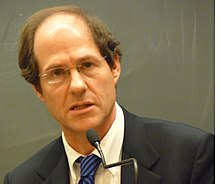
Cass Sunstein Wrote Another Book

I recently finished Simpler: The Future of Government by legal scholar and former OIRA administrator Cass Sunstein. I've read some of his other books--notably Risk and Reason, which emphasizes cost-benefit analysis in regulation--so I was excited to hear first-hand how his academic theories fared in Washington's bureaucratic and political swamp.

The book is framed around Sunstein's experience heading up OIRA, the executive-branch office responsible for overseeing new regulations set by the various federal agencies. OIRA studies proposed rules, coordinates expertise, manages inter-governmental turf issues, and ultimately serves as a veto point for regulation. Sunstein makes two core arguments. First, that public policy should be much simpler, accomplished largely by cutting red tape and through behavioral innovations that help businesses and citizens interact better with government (think label design, or -EZ government forms). Second, that public policy should have stronger empirical foundations, driven by cost-benefit analysis and retrospective analysis (looking back at existing regulations to determine their efficacy). The book generally alternates between short personal vignettes, research findings and theory from behavioral psychology, and descriptions of specific policy accomplishments Sunstein pushed through while at OIRA.

Sunstein's reflections on moving from academia to government administrator (with a painful confirmation fight in between) were by far the best parts of the book. His diagnosis of institutional incentives--academia favors novelty, politics favors loyalty--were fascinating. I did get the sense, however, that we're not hearing the whole story. Sunstein has devoted a career to studying OIRA and it's agenda, yet he resigned as soon as he could without raising eyebrows. This book offers a glimpse into some potential dissatisfaction about Washington--a snide comment here and there--but in general the tone is incredibly cheery and positive, almost eerily so. I suspect Sunstein's sense of duty has prevented a full and honest account; perhaps after Obama leaves office we'll see his full analysis of Washington's dysfunction. That's a book I would enjoy.

Photo Credit: Wikipedia

Simpler ranks near the bottom of Sunstein's many books, if only because its marketing style fits so poorly with the content. Given the success of Nudge, the impulse to publish another big-picture Malcolm Gladwell-esque book is understandable. But Sunstein has already published several of these, and the unifying theory--"simpler" government policy--is weak. He critiques rules prohibiting private-sector discretion, but admits the legal uncertainty and added costs of vague regulation is not always the best. He promotes performance standards over design standards, yet spends the bulk of the book cataloging the many ways in which process matters in behavioral decisionmaking. He takes pains to separate questions about the complexity of government from questions about the size of government, yet describes in detail the extreme politicization of every facet of his experience at OIRA, an evident failure of the idea in practice. In general the book bends over backwards to fit the big-picture theory, and rehashes lots of content from previous works in order to bulk up to the expected page count. This is a shame given how interesting and important Sunstein's accomplishments were at OIRA. 

Friday, May 3, 2013

What Is Hacking?

It seems pretty cut-and-dry, but on the margin the laws regarding how we define hacking and computer-mediated consent become tricky--and fascinating. James Grimmelmann has a must-read article evaluating the legal theory of the Computer Fraud and Abuse Act (CFAA; the government's big anti-hacking law), and some possibilities for improvement. The comments section also contains further excellent analysis.

The politicization of this issue has played out in a strange way, with many conservatives pushing for a more expansive definition of hacking and liberals criticizing what they see as an unacceptable government capacity for prosecutorial capriciousness. I tend to think the particular history and culture associated with hacking and computers explains these battle lines (i.e. young idealistic liberal nerds vs. The Man), but I'm not convinced stronger hacking rules would actually be worse for the little guy.

The popular conception of hacking still emphasizes the exploitation of big institutions by small groups. But as technology continues to democratize and spread, the exposure of average households to hacking risks will surely increase. Information asymmetries mean large organizations have huge opportunities for exploiting small gaps in uninformed individuals' increasingly computer-mediated lives.

Wednesday, May 1, 2013

Should Organized Labor Return to its May Day Roots?

Heart of the Beast Theater celebrates May Day in Minneapolis Photo Credit: Minnesota Public Radio
In honor of May Day, here's a great quote by Rad Geek (via Roderick Long) critically evaluating the current incarnation of the holiday:
"May Day is a celebration of the original conception of the labor movement, as expressed by anarchist organizers such as Albert Parsons, Lucy Parsons, Benjamin Tucker, and others: a movement for workers to come into their own, by banding together, supporting one another, and taking direct action in the form of boycotts, work stoppages, general strikes, and the creation of workers' spaces such as local co-operatives and union hiring halls. The spirit was best expressed by John Brill's famous exhortation to "Dump the bosses off you back"--by which he did not mean to go to a government mediator and get them to make the boss sit down with you and work out a slightly more beneficial arrangement. "Dump the bosses off you back!" meant: organize and create local institutions that let you bypass the bosses. Negotiate with them if it'll do some good; ignore them if it won't. The signal achievements of the labor movement in the late 19th and early 20th century were achievements in this spirit: the campaigns that won the 8 hour day and the weekend off in many workplaces, for example, emerged from a unilateral work stoppage by rank-and-file workers, declared by the Federation of Organized Trades and Labor Unions, and organized especially by the explicitly anarchist International Working People's Association, after legislative efforts by the National Labor Union and the Knights of Labor failed. The stagnant, or even backsliding, state of organized labor over the past half century is the direct result of government colonization and the ascendancy of government-subsidized unions.
This is a pretty harsh public choice story about the recent history of the labor movement: gains in legitimacy and state support have backfired by opening up new opportunities for special interests (i.e. capitalists) to seize control over the levers of power, constraining labor's freedom to demonstrate and fight. Although this seems undeniably true, it's probably not the whole story concerning labor's decline (technology & globalization mattered, for example), and it almost certainly undervalues the social benefits of widespread access to safe, stable channels for airing labor disputes. Increasing organized labor's capacity for radical action would almost certainly see a concurrent response from businesses in the form of more capricious firing and workforce intimidation.

Saturday, April 27, 2013

Architecture Break

The Oslo Opera House:
Photo Credit: The New York Review of Books
Designed by the architectural firm Snøhetta and completed in 2008, this building is clearly modeled on an iceberg bobbing just above the water. While I'm generally bearish about the aesthetic resilience of most glass-and-concrete geometric scrambles, the tight thematic focus and open public spaces lift it above its peers. 

More pictures here.